Address
304 North Cardinal St.
Dorchester Center, MA 02124
Work Hours
Monday to Friday: 7AM - 7PM
Weekend: 10AM - 5PM

Address
304 North Cardinal St.
Dorchester Center, MA 02124
Work Hours
Monday to Friday: 7AM - 7PM
Weekend: 10AM - 5PM


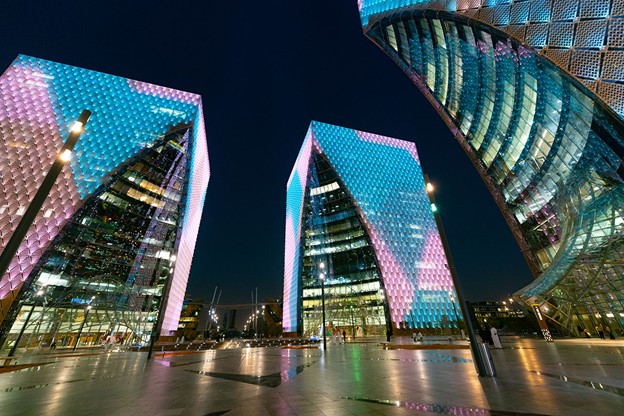
Innovation has become one of the most coveted currencies in today’s urban economy. From Silicon Valley to Shenzhen, cities compete to brand themselves as global hubs of innovation. However, the mechanisms through which innovation flourishes are far from uniform. Based on comparative research conducted between Boston and Milan during my postgraduate studies at Politecnico di Milano and MIT, and now extended to Riyadh, Saudi Arabia, the innovation district as a planning typology must evolve, especially when applied in the context of the Global South.
From Spontaneity to Strategy: Lessons from Boston and Milan
Boston’s innovation ecosystem emerged through an organic synergy of academia, capital, and local culture. It thrives on proximity, clustering, and a strong culture of experimentation supported by institutions like MIT and Harvard. Conversely, Milan presents a fragmented but networked innovation environment – less spatially defined, but rich in informal and distributed innovation nodes.
Both cities reflect distinct governance structures: Boston’s decentralized, city-region model fosters grassroots dynamism, while Milan struggles with integrating new innovation clusters like MIND into existing socio-economic fabrics. Crucially, both cases demonstrate that contextual sensitivity and participatory governance are indispensable. Where they are lacking, innovation districts risk becoming branded enclaves, disconnected from their urban ecosystems.
The Riyadh Model: A New Paradigm of Top-Down Innovation
Saudi Arabia offers a contrasting narrative. In Riyadh, innovation is not emerging from the bottom up, it is being built. Mega-projects such as Diriyah Gate, Digital City, and Riyadh Tech Valley are structured under powerful national entities like the Public Investment Fund (PIF), RDIA, SDAIA, and MoMRAH. These projects are guided by the overarching frameworks of Vision 2030, the National Strategy for Data and AI, and the National Smart Cities Program, with substantial financial resources and regulatory authority enabling execution at an unmatched pace.
Unlike in Boston and Milan, where innovation ecosystems developed from pre-existing conditions, Riyadh’s approach is top-down, linear, and orchestrated. This poses both risk and opportunity. The risks lie in potential misalignment with local socio-cultural norms and limited grassroots engagement. Yet, the opportunity is equally significant: a rare chance to test whether state-led, mission-oriented planning can produce a new blueprint for innovation in the Global South.
Engineering Innovation through Design and Policy
For professionals in the engineering and consulting sector, this model demands a shift in approach. Innovation should not be treated as an abstract aspiration – it must be engineered into the physical and policy infrastructure of a city. Innovation districts are not just campuses of R&D buildings; they are living systems that rely on connectivity, adaptability, and flow.
This requires deeply integrated thinking across policy design, spatial planning, technical execution, and user behavior. Landscape strategies, transit systems, and utility frameworks must be responsive – not just to global standards, but to local patterns. Smart infrastructure cannot be an afterthought; it must be embedded from the outset.
From a consultancy point of view, this calls for cross-sectoral coordination and an ability to decode political and institutional landscapes with the same rigor applied to physical masterplans.
Context is Not a Constraint – It’s the Starting Point
In engineering and consulting work, it’s tempting to lead with technical tools, international benchmarks, or off-the-shelf frameworks. But no tool or template can replace an understanding of place. Local governance, cultural dynamics, environmental constraints, and historical narratives are not side notes to the project – they are the project.
In Boston, innovation was relational and layered over time. In Milan, it moved through networks. In Riyadh, it is structured and strategic. Each city’s model reflects the reality of its political economy, urban DNA, and societal rhythms. Ignoring this is not just a missed opportunity – it’s a professional flaw.
Good engineering solves problems. Great engineering understands the terrain it builds on – socially, politically, economically, spatially. Contextual intelligence is not a soft skill; it’s a hard edge that distinguishes meaningful infrastructure from misaligned interventions.
The future of innovation won’t be defined solely by technology or capital – but by our ability to translate vision into systems that work in context. In the Global South especially, where cities are being built in real time, this isn’t just a design challenge – it’s a responsibility.